

Daily Auto-Yield 2.7%

Auto-compounded. No lock, no transfer required. Your funds stay in your wallet with complete control.

No KYC No KYC Proof-of-Stake Proof-of-Stake Blockchain Verified Blockchain Verified Non-Custodial Non-Custodial Auto-Compounding Auto-Compounding



Bitcoin Mining Explained: A Step-by-Step Guide to How It Works
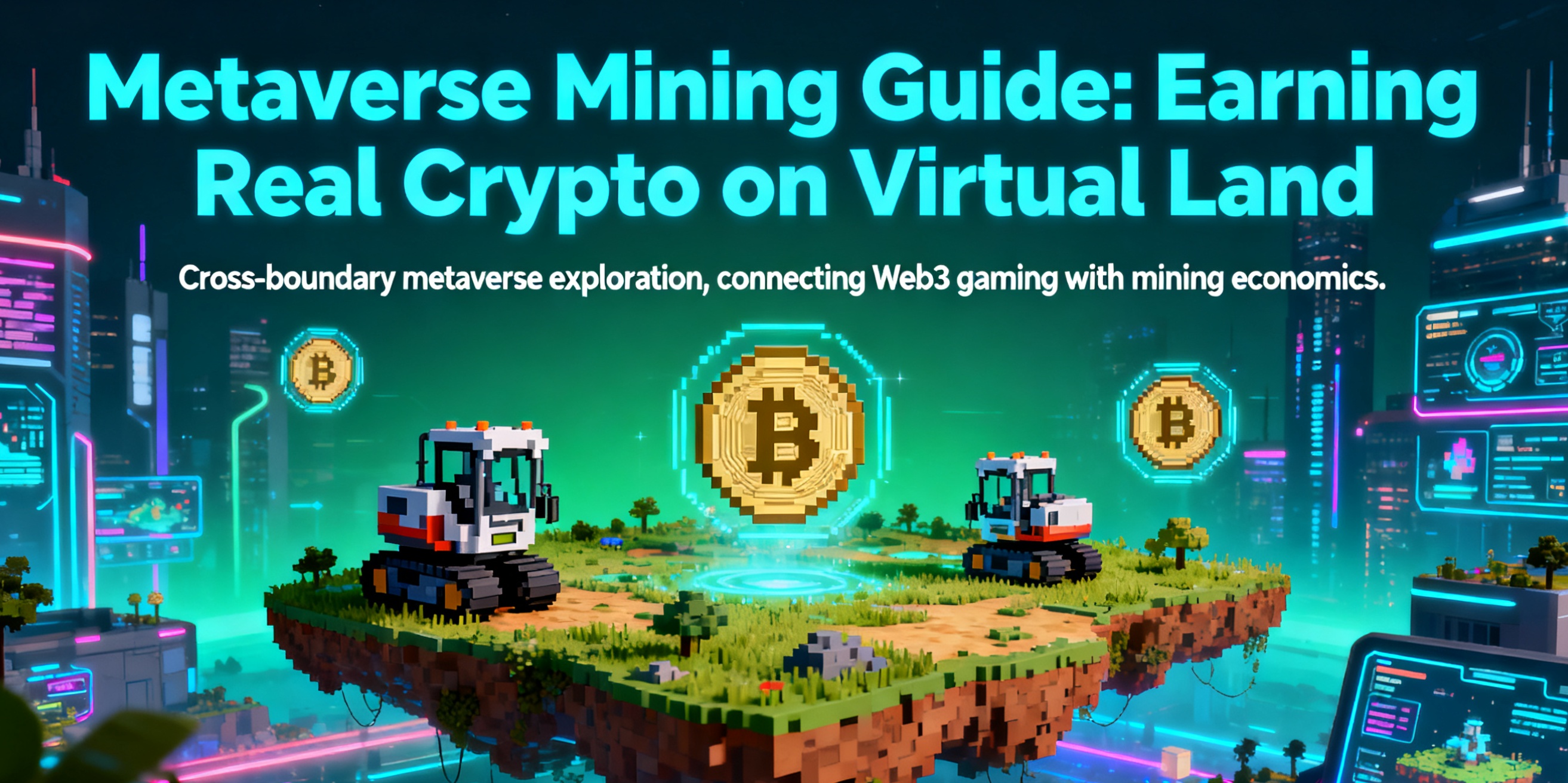
Bitcoin Mining Explained: A Step-by-Step Guide to How It Works

Bitcoin mining is the critical process that secures the Bitcoin network, verifies transactions, and creates new bitcoins. It is often described as the backbone of the entire cryptocurrency system. But how is Bitcoin mining actually done? At its core, it involves powerful computers solving complex mathematical puzzles to validate bundles of transactions, called blocks, and add them to the public ledger known as the blockchain.

The process begins with the collection of pending Bitcoin transactions from the memory pool. Miners around the world compete to compile these transactions into a new block. However, to successfully add this block to the blockchain, miners must solve a cryptographic puzzle, known as Proof-of-Work. This puzzle requires finding a specific number, called a nonce, that when combined with the block's data and passed through a hash function, produces a result that meets a certain target set by the network. This target is what determines the mining difficulty.

Miners use specialized hardware to perform trillions of these calculations per second. In the early days, mining was possible with standard CPUs, but the increasing difficulty quickly made that obsolete. The evolution moved to Graphics Processing Units (GPUs), then to Field-Programmable Gate Arrays (FPGAs), and finally to today's standard: Application-Specific Integrated Circuits (ASICs). These are machines designed solely for Bitcoin mining, offering immense processing power and energy efficiency compared to general-purpose hardware.

The mining operation itself is energy-intensive. These ASIC miners run 24/7, consuming significant amounts of electricity to run the hardware and cooling systems to prevent overheating. This has led to miners seeking locations with cheap, often renewable, energy sources to remain profitable. Once a miner's computer finds a valid nonce, it broadcasts the new block to the rest of the network. Other nodes then easily verify the solution and, upon consensus, add the block to their copy of the blockchain.

For this immense effort, the successful miner is rewarded. This reward comes in two parts: the block subsidy, which is newly minted bitcoins, and the transaction fees from all transactions included in the block. The block subsidy started at 50 BTC and halves approximately every four years in an event called the "halving," controlling Bitcoin's supply. This reward is the economic incentive that motivates miners to contribute their computational power to secure the network.

Today, most miners do not operate alone due to the high difficulty. They join mining pools, where participants combine their computational resources to increase their chances of solving a block. When the pool succeeds, the reward is distributed among members proportionally to the amount of processing power they contributed. This allows individual miners to receive more frequent, predictable payouts rather than waiting years to possibly solve a block solo.

In summary, Bitcoin mining is a sophisticated process combining cryptography, computer hardware economics, and game theory. It transforms electrical energy into computational work to secure a decentralized financial network, validate transactions, and issue new currency in a predictable, transparent manner. The continuous competition among miners is what makes the Bitcoin network exceptionally secure and resilient to attack.

Comment

MTMining

Decentralized USDC Auto-Yield Platform
No KYC
Proof-of-Stake
Blockchain Verified
Non-Custodial

Bitcoin Mining Explained: A Step-by-Step Guide to How It Works

Bitcoin Mining Explained: A Step-by-Step Guide to How It Works

Bitcoin mining is the critical process that secures the Bitcoin network, verifies transactions, and creates new bitcoins. It is often described as the backbone of the entire cryptocurrency system. But how is Bitcoin mining actually done? At its core, it involves powerful computers solving complex mathematical puzzles to validate bundles of transactions, called blocks, and add them to the public ledger known as the blockchain.

The process begins with the collection of pending Bitcoin transactions from the memory pool. Miners around the world compete to compile these transactions into a new block. However, to successfully add this block to the blockchain, miners must solve a cryptographic puzzle, known as Proof-of-Work. This puzzle requires finding a specific number, called a nonce, that when combined with the block's data and passed through a hash function, produces a result that meets a certain target set by the network. This target is what determines the mining difficulty.

Miners use specialized hardware to perform trillions of these calculations per second. In the early days, mining was possible with standard CPUs, but the increasing difficulty quickly made that obsolete. The evolution moved to Graphics Processing Units (GPUs), then to Field-Programmable Gate Arrays (FPGAs), and finally to today's standard: Application-Specific Integrated Circuits (ASICs). These are machines designed solely for Bitcoin mining, offering immense processing power and energy efficiency compared to general-purpose hardware.

The mining operation itself is energy-intensive. These ASIC miners run 24/7, consuming significant amounts of electricity to run the hardware and cooling systems to prevent overheating. This has led to miners seeking locations with cheap, often renewable, energy sources to remain profitable. Once a miner's computer finds a valid nonce, it broadcasts the new block to the rest of the network. Other nodes then easily verify the solution and, upon consensus, add the block to their copy of the blockchain.

For this immense effort, the successful miner is rewarded. This reward comes in two parts: the block subsidy, which is newly minted bitcoins, and the transaction fees from all transactions included in the block. The block subsidy started at 50 BTC and halves approximately every four years in an event called the "halving," controlling Bitcoin's supply. This reward is the economic incentive that motivates miners to contribute their computational power to secure the network.

Today, most miners do not operate alone due to the high difficulty. They join mining pools, where participants combine their computational resources to increase their chances of solving a block. When the pool succeeds, the reward is distributed among members proportionally to the amount of processing power they contributed. This allows individual miners to receive more frequent, predictable payouts rather than waiting years to possibly solve a block solo.

In summary, Bitcoin mining is a sophisticated process combining cryptography, computer hardware economics, and game theory. It transforms electrical energy into computational work to secure a decentralized financial network, validate transactions, and issue new currency in a predictable, transparent manner. The continuous competition among miners is what makes the Bitcoin network exceptionally secure and resilient to attack.

Comment